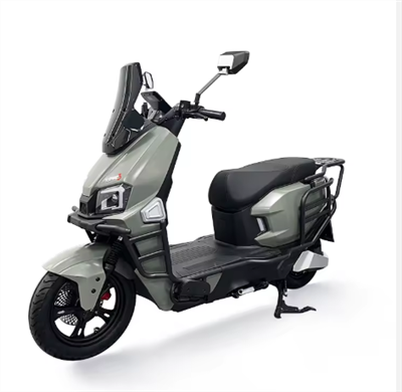
Global E-Mobility Report: Booming Demand For Chinese Electric Two-Wheelers (Q2 2026)
Leave a message
The global electric two-wheeler market is surging amid rising fuel prices, green policies, and demand for affordable urban mobility. Chinese brands lead the charge, dominating exports and reshaping global transportation.
Southeast Asia: The Fastest-Growing Hub
Southeast Asia remains the largest market, with Q1 2026 exports hitting 6.2 million units (+78% YoY). In Vietnam, Thailand, and Indonesia, Chinese e-scooters now hold 78% market share, displacing Japanese fuel motorcycles. Governments across ASEAN are accelerating "oil-to-electric" transitions-Indonesia targets 13 million e-motorcycles by 2030 and plans to ban fossil-fuel two-wheelers by 2050. High oil prices and low running costs have created "sold-out" conditions, with waiting lists stretching 1–2 months.
Europe & Americas: Premium & Smart Demand
European sales rose 51.7% YoY in Q1 2026. Stylish, connected models with NFC unlock, app control, and 100km+ range are popular among urban commuters. In the U.S., demand is strong for premium e-bikes and off-road models. However, EU regulations-including new battery passport and carbon footprint rules-are raising compliance barriers.
Africa & Latin America: Emerging Giants
Africa saw 62.4% YoY export growth in 2025, becoming a key growth engine. Affordable, durable e-motorcycles serve boda-boda taxi and delivery fleets. Latin America, a traditional stronghold, accounts for 36.7% of exports, with steady demand for cost-effective commuter models.
Industry Shifts: From Volume to Value
Chinese manufacturers are moving upmarket. Average export prices rose 20%+ in 2026 as brands launch high-end, feature-rich models. Leading players-Yadea, Aima, Tailg, and Ninebot-are building local factories to cut duties and speed delivery. Yadea's Vietnam plant now produces 1 million units annually.
Outlook
The global electric two-wheeler market is projected to reach $98.81 billion by 2035 (CAGR 9.9%). With 2.5 million fuel motorcycles in Southeast Asia alone, the long-term transition potential is massive. Chinese brands are well-positioned to lead through cost efficiency, smart tech, and rapid innovation, cementing their role as the new global standard in urban mobility.